The Shift Toward Ground-Up Investment
Northern California real estate has historically rewarded active, opportunity-driven investors. For decades, the dominant strategy centered on acquiring distressed properties, executing targeted renovations, and reselling at a premium. However, that model is becoming increasingly constrained.
In markets such as Sacramento, El Dorado Hills, and Loomis, inventory remains limited while competition for quality resale properties continues to intensify. As a result, bidding wars frequently compress margins before renovation work even begins, significantly increasing risk exposure for investors.
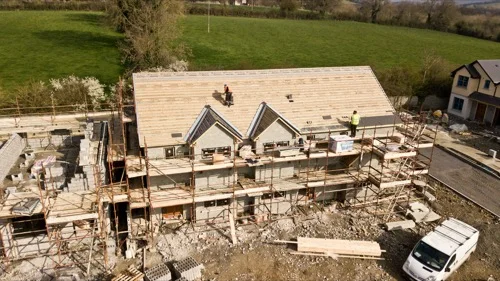
In response, sophisticated investors are shifting their focus toward land acquisition and ground-up construction as a more controlled and strategically scalable investment model. New development offers greater predictability, alignment with current buyer demand, and a more direct path to equity creation—particularly in luxury segments where expectations for design, efficiency, and performance are significantly higher.
Eliminating the Hidden Cost Structure of Resale Properties
Older homes often carry hidden financial liabilities that are not immediately visible during acquisition.
Behind cosmetic finishes, investors frequently encounter aging infrastructure—outdated electrical systems, inefficient plumbing, inadequate insulation, or non-compliant building components. These issues can quickly escalate capital expenditure requirements and erode projected returns.
Ground-up construction eliminates this uncertainty entirely. Every system—from foundation to roofing—is newly installed, code-compliant, and designed for long-term performance.
For investment properties, this translates into a critical advantage: predictable operating costs. During the first years of ownership, maintenance expenses remain minimal, allowing for more accurate cash flow modeling and improved financial forecasting.
In high-demand rental markets such as Lincoln or El Dorado Hills, tenants also expect flawless functionality and modern systems. New construction significantly reduces operational disruptions, improving tenant retention and stabilizing income performance.
Aligning with Modern Market Demand
Buyer and tenant expectations in Northern California have evolved significantly, driven largely by lifestyle changes and the normalization of remote and hybrid work models.
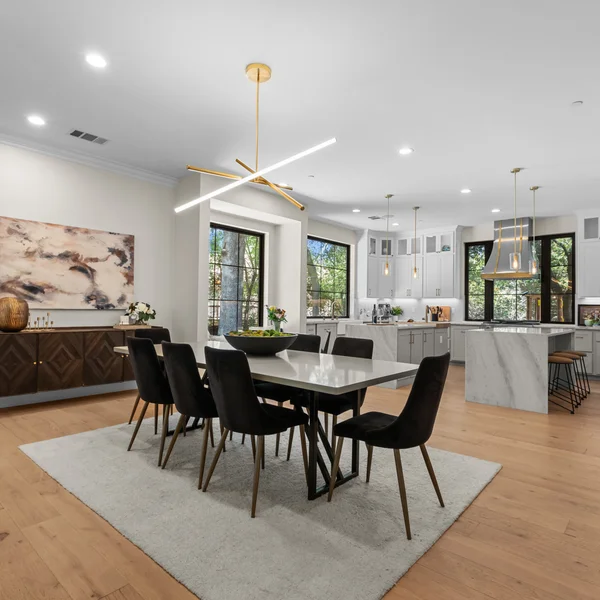
Traditional resale homes often feature segmented layouts, limited natural light, and outdated spatial planning. In contrast, modern demand favors open-concept living, flexible workspaces, and seamless indoor-outdoor integration.
New construction allows investors to design directly for these preferences. High ceilings, expansive glazing, and multifunctional living areas are no longer premium upgrades—they are baseline expectations in the luxury segment.
Additionally, ground-up development enables strategic integration of income-generating features such as Accessory Dwelling Units (ADUs), dual primary suites, or multi-functional guest residences. These design decisions, when incorporated at the planning stage, can significantly enhance both rental yield and long-term resale value.
Energy Efficiency as a Long-Term Financial Advantage
California’s strict energy regulations, including Title 24 standards, are often viewed as compliance requirements. However, in the context of investment strategy, they function as a measurable financial advantage.
Modern construction delivers substantially higher energy performance compared to older housing stock. Features such as solar integration, high-efficiency HVAC systems, advanced insulation, and high-performance glazing reduce operational costs and improve overall building efficiency.
For rental properties, reduced utility expenses support stronger net operating income. For resale scenarios, energy efficiency becomes a key differentiator that appeals to both luxury and cost-conscious buyers.
Experienced builders such as California Home Company integrate these requirements from the design phase, ensuring that compliance is not reactive but embedded into the overall investment strategy.
Equity Creation Through Strategic Land Acquisition
The strongest returns in ground-up development are often realized before construction begins.
In supply-constrained markets such as Northern California, land is the primary driver of long-term value creation. Securing a well-positioned parcel—whether within a private golf community, vineyard estate, or hillside enclave—can establish immediate intrinsic equity.
Unlike resale transactions, where buyers acquire pre-existing equity built by prior owners, ground-up investors create value through controlled development. By managing both acquisition and construction, investors capture development margin that would otherwise be distributed across multiple stakeholders.
This structure also provides a natural buffer against market volatility. In slower cycles, properties can be held as premium rentals, preserving equity while generating ongoing cash flow.
Risk Mitigation and Builder Accountability
In real estate investment, uncertainty is one of the most significant risk factors. New construction materially reduces this exposure.
Comprehensive builder warranties provide protection against structural and system-related defects, transferring risk away from the investor. This level of protection is rarely available in resale acquisitions, where properties are purchased in as-is condition following limited inspection periods.
Equally important is construction management discipline. Experienced teams ensure that permitting, scheduling, and procurement are aligned to minimize delays and carrying costs. In investment terms, time is capital—every month saved in construction directly improves return on investment.
Efficient coordination with local jurisdictions in areas such as Sacramento and El Dorado County is particularly critical, as permitting timelines can significantly impact project feasibility and cash flow performance.
Long-Term Appreciation and Exit Strategy Strength
Investment horizons in residential real estate typically range from five to ten years. Within this timeframe, asset quality and architectural relevance become key determinants of exit value.
A newly constructed home maintains modern design relevance and structural integrity far longer than renovated older stock, which inherently retains limitations of its original construction era.
As Northern California continues to attract high-income professionals and lifestyle-driven buyers, demand remains strongest for homes that offer modern layouts, energy efficiency, and technology integration.
New construction properties are uniquely positioned to meet these expectations at scale, ensuring stronger resale performance and broader buyer appeal at exit.
Final Perspective
Ground-up development in Northern California represents a shift from reactive investing to controlled value creation.
By combining strategic land acquisition, thoughtful design integration, and disciplined construction execution, investors gain full control over both product quality and financial outcome.
Whether positioned in suburban enclaves or vineyard estates, the principle remains consistent: control the land, control the design, and you control the return.